
Apollo, Blackstone, Brookfield, and KKR line up behind NVIDIA in $500bn move to make compute an asset class
Wall Street's biggest private capital houses have thrown their weight behind NVIDIA.

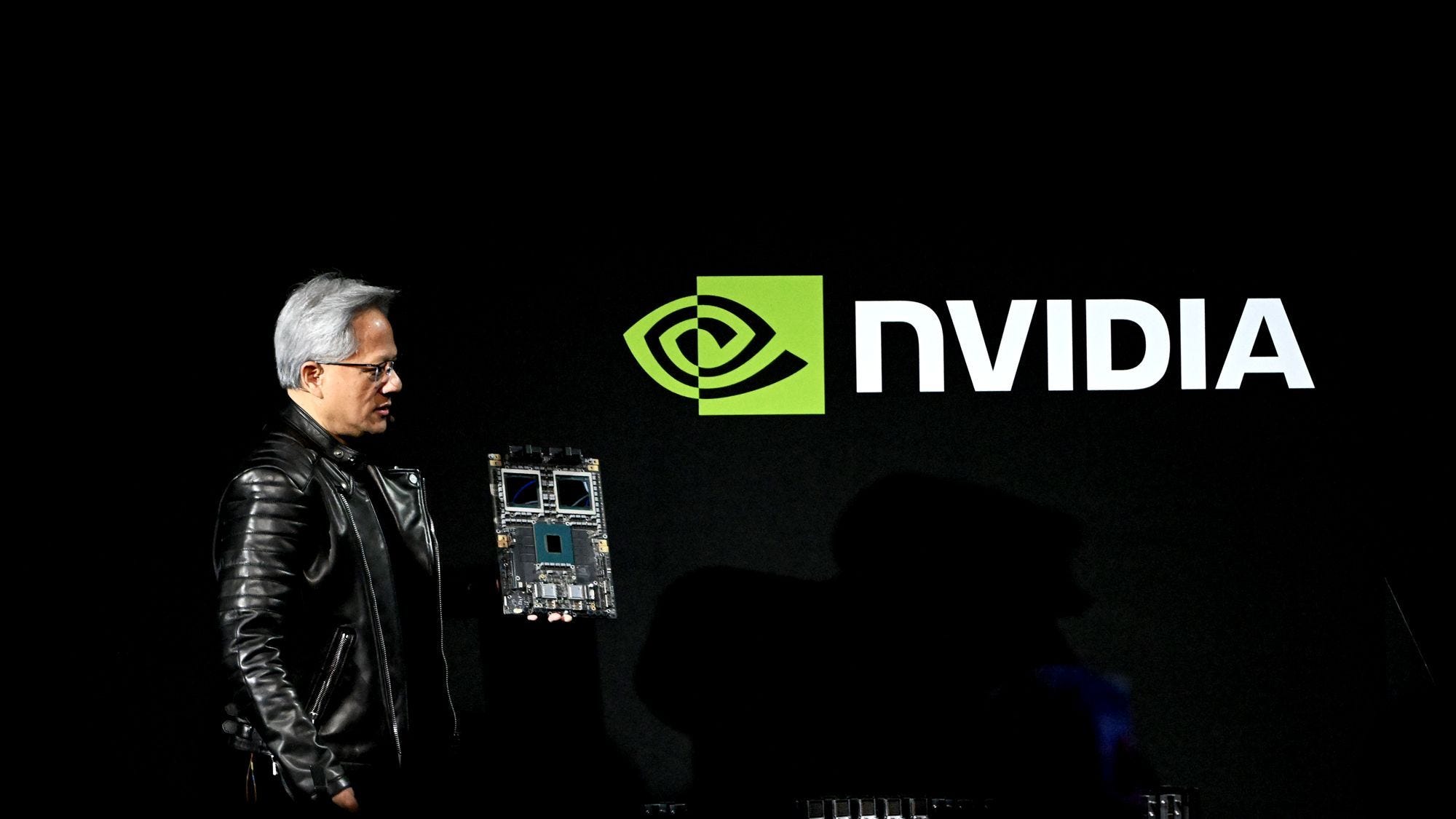
Apollo, Blackstone, Brookfield, and KKR, together with BlackRock and Goldman Sachs, have agreed to help raise more than $500bn of outside money to build the data centres and power that artificial intelligence now runs on.
It is among the clearest signs yet that the AI buildout has become a job for private markets.
NVIDIA said on Monday it had signed memorandums of understanding with the six firms to set up independent compute financing platforms, the first of their kind at this scale. The platforms would treat NVIDIA’s chips and the systems around them as an investable asset, assembling pools of capital large enough to fund the AI “factories” used by frontier labs, enterprises, and cloud providers.
The agreements are not yet binding, and hinge on final documentation.
Reuters reported that the largest technology companies will together spend more than $730bn on AI this year. Demand for computing power is running well ahead of what the hyperscalers can fund alone, and banks remain wary of writing cheques this size against assets with no long track record. Private capital has taken up much of the difference.
“We began by building chips; today, we are helping create a new class of productive, investable infrastructure: AI factories,” said Jensen Huang, its founder and chief executive, adding that “in AI, compute is revenue.” The company argues its hardware offers the lowest cost per token, the highest revenue and the longest life of any option, helped by CUDA software that keeps improving the economics long after the chips are switched on.
“Modern compute has emerged as a scarce, mission-critical asset class with compelling investment characteristics that is positioned to drive significant long-term economic growth and productivity gains,” added Jim Zelter, Apollo’s president, who set the effort within what he called a broader Global Industrial Renaissance.
BlackRock helped create the AI Infrastructure Partnership in September 2024 with its Global Infrastructure Partners arm, Microsoft, and Abu Dhabi’s MGX, with NVIDIA as technical adviser. That vehicle is chasing $30bn of equity and as much as $100bn once debt is added, and last year led the roughly $40bn purchase of Aligned Data Centers, the sector’s largest deal at the time.
Blackstone has become one of the largest data centre landlords in private hands. It bought QTS for about $10bn in 2021 and has multiplied its leased capacity many times over since. It also put billions more into pre-let developments through its property trust last year and pledged over $25bn to digital and energy infrastructure in Pennsylvania. Its president, Jon Gray, described the firm as a large investor across NVIDIA’s business.
Brookfield closed the first tranche of a dedicated AI infrastructure fund and set out plans for a $100bn data centre campus in Kentucky. “With demand for large scale AI compute growing significantly as adoption scales across industries, compute is fast becoming the essential layer of infrastructure and a core pillar of the Brookfield AI infrastructure strategy,” said Bruce Flatt, its chief executive. KKR anchored its role in Helix Digital Infrastructure, the platform NVIDIA helped seed.
NVIDIA has taken stakes in the very companies that buy its chips, among them an investment of up to $100bn in OpenAI unveiled last September, and holdings in data centre operators such as CoreWeave and Nebius.
In late July the Wall Street Journal and Bloomberg reported that it was in talks to guarantee as much as $250bn of lease payments tied to an OpenAI project and to help finance some $350bn of chip purchases, reviving the “circular” financing worries voiced by Bernstein’s Stacy Rasgon and others. Huang has rejected the label, arguing that NVIDIA’s stakes amount to only a sliver of what its customers must go out and raise.
What distinguishes the new platforms is that they lean on NVIDIA’s own balance sheet and are built to run on independent, third-party money.